
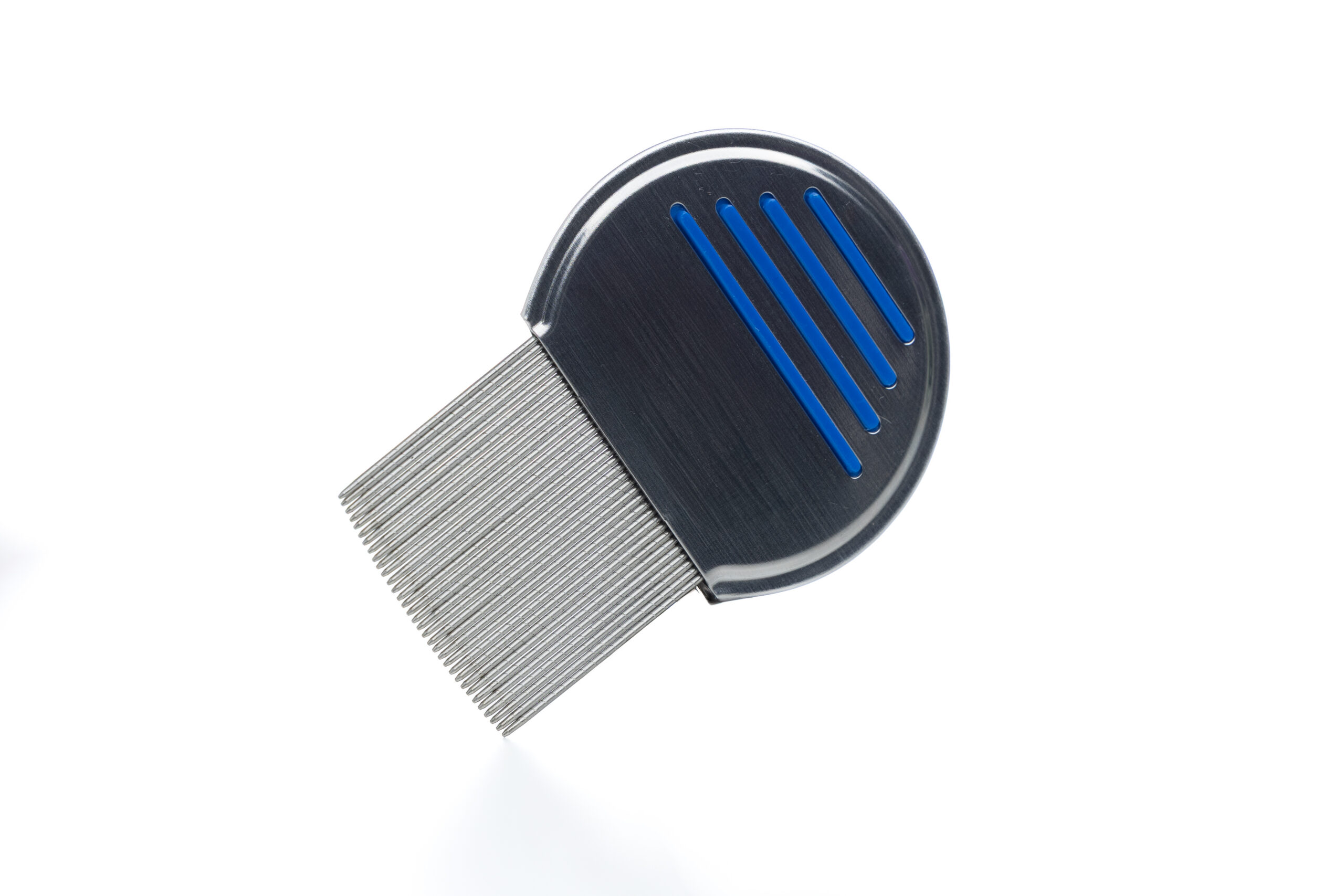
If there’s one step in head lice treatment that parents consistently underestimate, it’s the comb-through. Most people focus their energy on the treatment product—the shampoo, the oil, the mousse—and treat the combing as a quick finishing step. But the truth is that the comb-through is where head lice treatment either succeeds or fails.
Products kill and stun live head lice. The comb is what actually removes them—along with the nits that, if left behind, will hatch within a week and restart the whole cycle.
Doing it right makes the difference between a head lice infestation that’s resolved in one treatment and one that drags on for weeks. Here’s exactly how to use a head lice comb effectively and what to avoid along the way.
Why the Right Head Lice Comb Matters More Than You Think
Not all lice combs are created equal. The cheap plastic combs that come bundled with drugstore lice kits are typically too wide in tooth spacing to catch the smallest nits, too flimsy to work through thick or tangled hair without bending, and too uncomfortable to hold for the 30 to 45 minutes a proper comb-through requires.
My Hair Helpers’ Lice Eliminator Comb was designed to solve every one of those problems.
The teeth are stainless steel—firm, precise, and spaced closely enough to catch even the tiniest lice eggs that other combs routinely miss. This makes a huge difference because a nit that slips through the teeth of an inferior comb is a nit that will hatch in 7 to 10 days and start the infestation over again.
Our comb is built to last. It’s durable, reusable, and easy to sterilize between uses or between family members. It works on all hair types, from fine and straight to thick, curly, and coily. The anti-slip grip handle gives you real control during the process, which makes a significant difference when you’re working through dense sections of hair for an extended period. It also comes with a 100% happiness guarantee, so if you’re not satisfied with the results, you’re covered.
You can purchase our lice comb directly from the My Hair Helpers website or on Amazon in a single pack, a 2-pack, or a 3-pack.
Before You Start a Head Lice Comb-Through
A comb-through done well requires preparation. Rushing into it without the right setup is one of the most common reasons parents don’t get full results the first time.
What you need before you begin:
- My Hair Helpers Lice Eliminator Comb
- My Hair Helpers Mint Conditioner to apply before combing
- A bright light source, such as a headlamp or a strong lamp positioned directly over the work area
- Hair clips or elastics to section the hair as you work
- White paper towels or a white cloth to wipe the comb after each pass
- A bowl of warm water to rinse the comb between passes
- Patience—plan for 30 to 45 minutes for short to medium hair and up to an hour for long or very thick hair
Set your child up somewhere comfortable like in front of a screen or with an audiobook playing. The more relaxed and still they are, the easier your job will be.
Step-by-Step: How to Comb for Head Lice and Nits
Step 1: Apply Conditioner
In a spray bottle, mix a few spritzes of our Mint Conditioner with warm water. Spray the conditioner mixture on the ends of the hair to soften and detangle it. Wet hair makes it easier to see the lice, and the conditioner makes it easier to comb through.
Step 2: Section the Hair
Divide the hair into four to six sections using clips or elastics, depending on thickness and length. Working in sections ensures you cover every part of the scalp systematically rather than combing through randomly and missing areas. Start at the nape of the neck and behind the ears, as these are the areas where lice concentrate most heavily because they’re warm and close to the scalp.
Step 3: Start at the Scalp and Pull Outward
Place the Lice Eliminator Comb as close to the scalp as possible without scraping. The goal is to catch lice and nits from the root outward. Pull the comb slowly and steadily through the full length of the hair section in a single smooth motion. Rushing or jerking the comb dislodges nits without removing them and causes unnecessary discomfort.
Step 4: Wipe and Check After Every Pass
After each stroke, wipe the comb across a white paper towel and examine what came off. You may see lice that are moving or nits, which are small, oval, and typically tan to yellowish in color. Rinsing the comb in warm water between passes keeps the teeth clear and maintains the comb’s effectiveness.
Step 5: Work Through Every Section
Move methodically through each section of hair, re-clipping completed sections as you go. When you’ve worked through the entire head, go back and do a second pass through each section. Two full passes is the standard for an effective comb-through.
Step 6: Final Rinse and Inspection
Rinse the hair thoroughly after combing, then do a final visual inspection under good lighting. Part the hair in multiple places close to the scalp and look for any remaining live lice or clusters of nits. Pay particular attention to the hairline, behind the ears, and the nape of the neck.
Common Head Lice Combing Mistakes to Avoid
Even parents who are trying hard to do this right often make the same mistakes. Here’s what to watch for:
- Combing dry hair without any product. Dry hair creates friction, causes breakage, and makes nit removal significantly harder. Always apply My Hair Helpers Mint Conditioner before combing.
- Using a comb with plastic or widely spaced teeth. A comb that can’t catch the smallest nits isn’t doing the job. The stainless steel teeth of our Lice Eliminator Comb are specifically designed to close that gap.
- Combing too quickly. Speed is the enemy of thoroughness. A fast, careless comb-through misses lice and nits that a slow, methodical one would catch. Take your time.
- Not wiping the comb after every pass. A comb loaded with lice and nits from the previous pass is a comb that can deposit them back into the hair. Wipe after every single stroke.
- Skipping sections. Random combing leaves gaps. Section the hair and work through it systematically—every part of the scalp, every time.
- Only combing once. One pass through the hair is not sufficient. Two complete passes per session is the minimum for an effective comb-through.
- Stopping after a single treatment. Even a thorough comb-through won’t catch every nit. Plan to repeat the combing process every two to three days for two weeks, and do a full follow-up treatment with My Hair Helpers Dimethicone Oil at the 7 to 10 day mark.
The Right Head Lice Comb Makes All the Difference
A good head lice comb is what turns treatment into real removal. My Hair Helpers’ Lice Eliminator Comb is designed for the careful, consistent comb-throughs that make the biggest difference, with stainless steel teeth, an anti-slip grip, professional-grade performance, and versatility for all hair types.
Whether you are treating an active case or keeping extra combs on hand for follow-up checks, having the right tool matters. Pick up a single pack, 2-pack, or 3-pack on the My Hair Helpers website or Amazon, and go into your next comb-through prepared, confident, and ready to get the job done right.
Frequently Asked Questions About Head Lice Combing
How often should I comb during treatment?
Every two to three days for a minimum of two weeks. Regular combing catches newly hatched head lice before they can mature and reproduce, which is what breaks the lice cycle completely.
Can I use the My Hair Helpers Lice Comb on curly or coily hair?
Yes. Our head lice comb is designed for use on all hair types, including curly, coily, and very thick hair. Working in small, well-conditioned sections and using plenty of conditioner makes the process manageable regardless of hair texture.
How do I sterilize the comb between uses?
Soak the lice comb in hot water—at least 130°F—for 10 minutes, or wash thoroughly with soap and hot water. The stainless steel construction makes sterilization simple and ensures the comb holds up over repeated uses and treatments.
Can the same comb be used for multiple family members?
Yes, as long as it’s sterilized between uses. The 2-pack and 3-pack options available on the My Hair Helpers website and Amazon make it easy for larger households to have a dedicated comb for each family member.
What if I keep finding head lice after multiple comb-throughs?
If live head lice are persisting despite thorough treatment and regular combing, it’s worth considering whether re-exposure is occurring from an untreated household member, a classmate, or a close contact. It may also be worth booking a professional treatment with My Hair Helpers to ensure the infestation is fully resolved.
